

Diagnosing and Treating Skin Growths for Jacksonville Residents
Finding a growth on your skin can be unsettling—maybe even a little embarrassing. But don’t worry, Coastal Dermatology & Medspa is here to help you navigate it with care and clarity. While most growths are harmless, we keep an eye out for any signs of cancer or precancerous changes, walking you through every step of the process for total peace of mind.
Dr. Sanjiva Goyal, our board-certified dermatologist, and our team of providers specialize in diagnosing, treating, and managing skin growths at our Jacksonville and Ponte Vedra Beach locations. Ready to get to the bottom of that spot? Call us today or book your appointment online to have your skin growths assessed and feel confident again.
Book Your Comprehensive Skin Check Today
Reach out today to get your questions answered and take the first step toward healthier skin.
What Causes Skin Growths?
Skin growths can arise from various factors, with prolonged sun exposure, genetics, and hormonal changes playing significant roles. At Coastal Dermatology and Medspa, our skilled professionals are committed to not only diagnosing, treating, and removing these benign growths but also empowering you with vital information on possibly preventing certain types of growths in the future.
This guidance extends beyond just personal care; it benefits friends and family by promoting safe practices when enjoying the great outdoors, whether at the beach, camping, or engaging in other activities exposed to the elements. Living in sunny Florida is wonderful, and with our expert advice on prevention and maintenance, you can protect your skin and fully embrace the vibrant lifestyle that comes with it.
What Are Common Types of Skin Growths?
There are many types of skin growths, and we help patients diagnose and address them all. With advanced dermatologic and surgical techniques, we can minimize the appearance of or completely remove these growths. Some common types include:

The Safe Way to Address Skin Growths
Skin growths, though often small, can become a persistent hassle in your daily life. They can rub against your clothes, get caught on jewelry, or affect your routine when shaving or applying makeup. While the idea of addressing growths on your own might sound easy, attempting at-home removal can lead to serious risks, including pain, scarring, unwanted bleeding, or even infections.
What’s more, what seems like a harmless skin tag could actually be something more serious, like a wart or even skin cancer. That’s why it’s important to get it checked out properly. For safe, effective removal, trust the experts at Coastal Dermatology & Medspa. Our providers are here to deliver exceptional care for all kinds of skin concerns.
Jacksonville’s Top Questions About Skin Growths
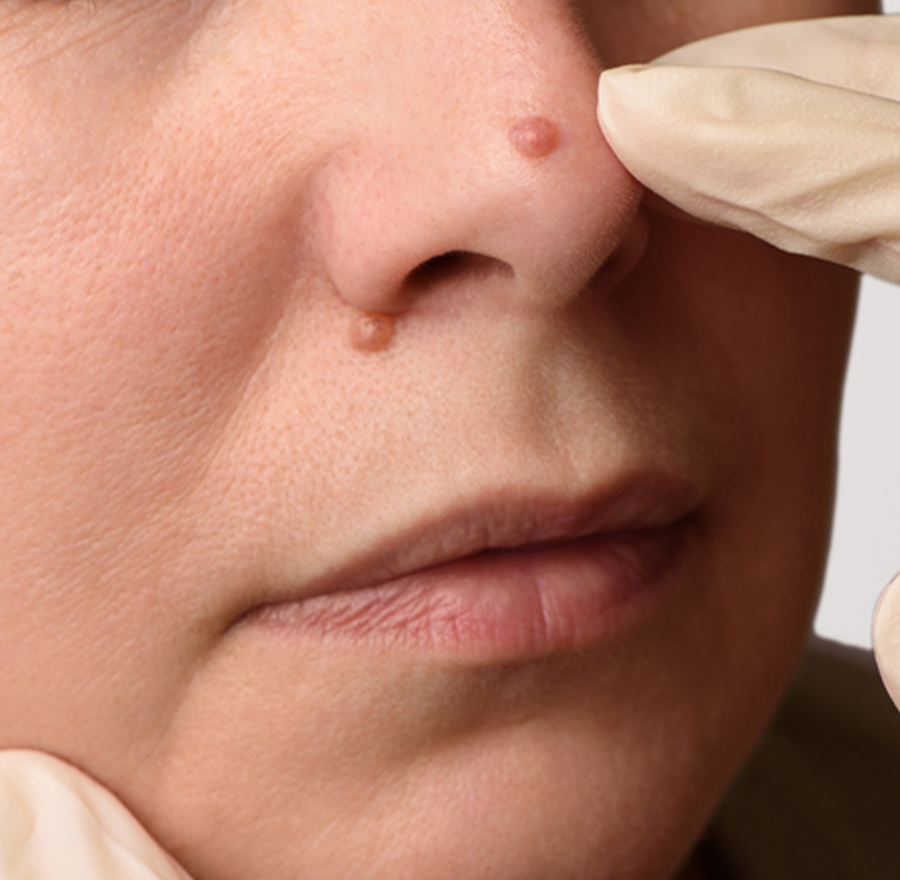
Skin growths are tissue bumps that extend beyond the surface of your skin. They can range from harmless keratoses and moles to more serious, cancerous growths. A professional evaluation helps identify what type you’re dealing with and guides the right treatment plan.
Changes in a mole’s shape, color, or texture can be warning signs of a potential cancerous growth. Also, if you suddenly notice more moles developing, it’s a good idea to have them checked out by the experts at Coastal Dermatology & Medspa. Remember to use the ABCDE guide during your self-skin checks to stay proactive about your health.
These growths happen when clusters of pigment cells gather together in your skin, and while most are completely harmless, some can develop into skin cancer. If a mole is in an uncomfortable spot or you simply don’t like the way it looks, removal is a simple option to consider.
They’re all common, but they form differently. Moles are clusters of pigment-producing cells, usually flat or slightly raised and brown, black, or skin-toned. Skin tags are soft, harmless flaps of skin that dangle from a thin stalk, usually where skin rubs against skin (e.g., the neck, underarms, or eyelids). Warts are rough, grainy growths caused by HPV, and unlike the others, they’re contagious. Cysts are fluid- or debris-filled sacs beneath the skin, often appearing as smooth, movable bumps. Lipomas are soft, slow-growing fatty lumps just under the skin. Because several of these can look similar at a glance, an in-person exam is the most reliable way to know which one you actually have.
The large majority of moles, skin tags, cysts, and lipomas are completely benign. That said, you should have any growth checked if it’s new and changing, growing quickly, asymmetrical, has an irregular or blurry border, contains multiple colors, is larger than a pencil eraser, bleeds, or doesn’t heal. A growth that looks different from your other spots (sometimes called the “ugly duckling” sign) is also worth a second look. When in doubt, it’s always reasonable to have it examined.
Dermatologists consistently advise against it. Popping or cutting into a cyst at home can push its contents deeper into surrounding tissue, causing infection and worse scarring than professional removal would. Over-the-counter freeze kits and removal creams for skin tags and warts carry a real risk of burns, irritation, and skin ulcers, and can end up treating the wrong thing if what you have isn’t actually a skin tag or wart. There’s also no way to be fully sure at home that a growth isn’t something that needs a biopsy. In-office removal is quick, controlled, and far less likely to leave a lasting mark.
Yes. Warts are caused by HPV (human papillomavirus), so they can spread to other areas of your own skin through touching or scratching, and can potentially pass to other people through skin-to-skin contact or shared items like towels. This is one of the main reasons dermatologists recommend having warts treated rather than left alone — unlike moles, cysts, or lipomas, they don’t just stay put.
It depends on the type. A mole removed completely (fully excised) generally doesn’t return, though a partial removal can occasionally leave behind pigment. Warts are the most likely to recur, since they’re caused by an active virus in the skin — sometimes more than one treatment is needed to fully clear them. Skin tags themselves don’t grow back once removed, but new ones can appear nearby if the same friction or skin-fold factors are still present. Cysts can return if the sac (lining) isn’t fully removed along with the fluid or debris inside, which is one reason professional removal is more reliable than draining at home.
Most in-office removals are done with a local anesthetic, so discomfort during the procedure is minimal, you’ll likely feel a quick pinch, then pressure rather than pain. Afterward, some tenderness for a few days is normal. Scarring depends on the type of growth, its size, and its location: skin tag and small mole removals often heal with little to no visible mark, while larger cysts or lipomas that require a deeper excision may leave a small, thin scar that fades over time.
It depends on whether the removal is considered medically necessary or purely cosmetic. Insurance (including Medicare) typically covers removal when a growth is painful, inflamed, infected, rapidly growing, bleeding, or located somewhere it’s repeatedly irritated or catches on clothing. Removal done purely for cosmetic reasons, for example, a skin tag or lipoma that isn’t bothering you medically is usually not covered and would be an out-of-pocket cost. We’re happy to help you understand which category your situation falls into and what to expect before your visit.
It depends on the type of growth, but most in-office removals follow a similar pattern: the area is cleaned and numbed with a local anesthetic, then the growth is removed using the technique best suited to it, snipping or cauterizing for skin tags, freezing (cryotherapy) or topical treatment for warts, and a small excision for cysts, lipomas, or suspicious moles. Cysts in particular are removed along with their surrounding sac to reduce the chance of recurrence. Most procedures take just a few minutes and are done the same day, right in the office.
Many people do choose to leave a stable, painless lipoma or cyst untreated, and that’s often perfectly reasonable. However, it’s still worth having it evaluated at least once so a dermatologist can confirm what it actually is since some lumps that feel similar on the surface can be something else that benefits from earlier treatment. After that, you and your dermatologist can decide together whether removal makes sense now, later, or not at all.
Your Daily Comfort and Skin Health Go Hand-in-Hand
Don’t let skin growths disrupt your confidence. Contact us now to schedule a consultation and discover the best treatment options tailored to your needs!