

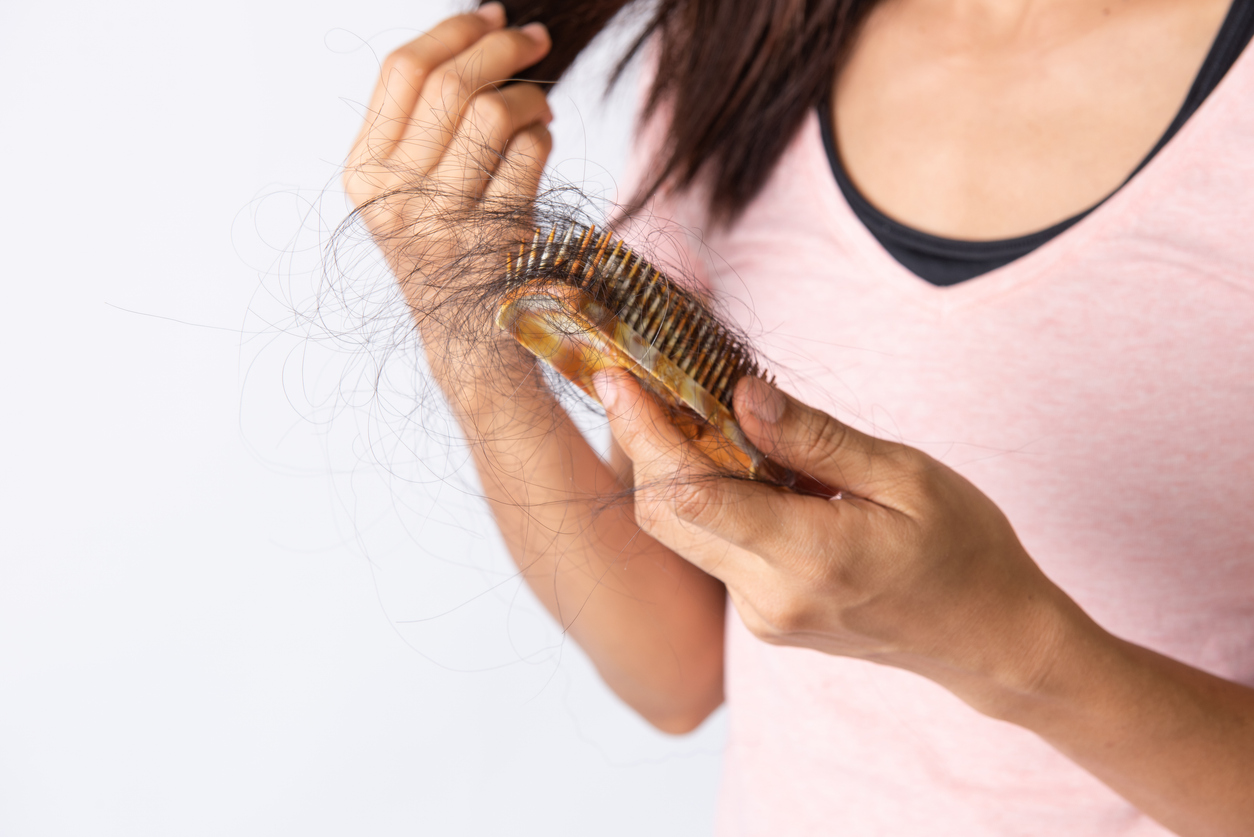
If you’ve noticed a few extra strands on your pillow or a little more hair swirling around the shower drain, you’re not imagining it, and you’re definitely not alone. Every year, right around late summer and into early fall, our office sees a steady uptick in patients asking the same worried question: Why am I losing so much hair all of a sudden?
At Coastal Dermatology in Jacksonville, that question tends to arrive with a very specific backdrop. We go from months of intense heat, humidity, and sun exposure into cooler, drier air, and our hair responds to that shift. For most people, this seasonal hair shedding is completely normal and nothing to panic about. But for others, what looks like a seasonal slump is actually early alopecia, and catching that distinction early makes a difference in how successfully it can be managed.
TL;DR: Seasonal Shedding vs. Alopecia
- Seasonal shedding is spread evenly across the scalp
- Seasonal shedding resolves within three to six months on its own
- Alopecia shows up as patches, a widening part, or a receding hairline
- Seasonal triggers include summer heat, chlorine, saltwater, and stress
- Warning signs of alopecia include round or oval patches, asymmetrical thinning, and scalp redness or itching
- When in doubt, a dermatologist can pinpoint the cause and provide a treatment option
Why Hair Loss Ramps Up in the Fall
It might seem strange that hair would react to the calendar, but there’s real biology behind it. Hair grows in cycles before the hair sheds and a new strand takes its place:
- An active growth phase (anagen)
- A short transitional phase (catagen)
- A resting phase (telogen)
On any given day, most of your hair is in an active growth phase, with only a small percentage resting and preparing to fall out.
Seasonal changes, especially the transition out of summer, can nudge more hairs into that resting phase all at once. Research has observed seasonal variation in hair shedding, with more hair loss occurring in the fall and, to a lesser extent, in the spring. Because hair that enters the resting phase doesn’t actually fall out for another two to three months, the shedding you notice in October or November may actually be a delayed reaction to the long, sun-soaked days of July and August.
Other Seasonal Culprits
A few other factors tend to pile on around this time of year, including:
- Summer sun and heat, which dry out the scalp and hair shaft, especially for anyone spending a lot of time at the beach or pool.
- Chlorine and saltwater, which strip natural oils from hair, leaving it more brittle by the time cooler weather rolls in.
- Lower fall and winter humidity, which can dry out the scalp and sometimes gets mistaken for shedding when it’s really just dryness and flaking.
The Technical Term for Seasonal Shedding
This kind of seasonal shedding has a formal name: telogen effluvium, the second most common form of hair loss. Its defining feature is that it’s diffuse (spread evenly across the scalp) and temporary.
Because hairs that enter the resting phase stay in place for two to four months before falling out, you may not notice the shedding until two or four months after whatever triggered it. If your hair loss has an obvious trigger and a light at the end of the tunnel, it’s probably seasonal.
What is Alopecia?
Alopecia is a broader term that covers several conditions, and it doesn’t always look or behave like garden-variety shedding. Depending on the type, it can be gradual and pattern-based, sudden and patchy, or tied to an underlying autoimmune or hormonal issue.
A few of the most common forms we treat at Coastal Dermatology include:
Androgenetic Alopecia (Male or Female Pattern Hair Loss)
This is the most common type of hair loss overall, and it tends to show up gradually. In men, it starts as a receding hairline or thinning at the crown. In women, it’s more likely to appear as a widening part of general thinning across the top of the scalp.
Unlike seasonal shedding, androgenetic alopecia is progressive, tending to slowly worsen over months and years rather than resolve on its own.
Alopecia Areata
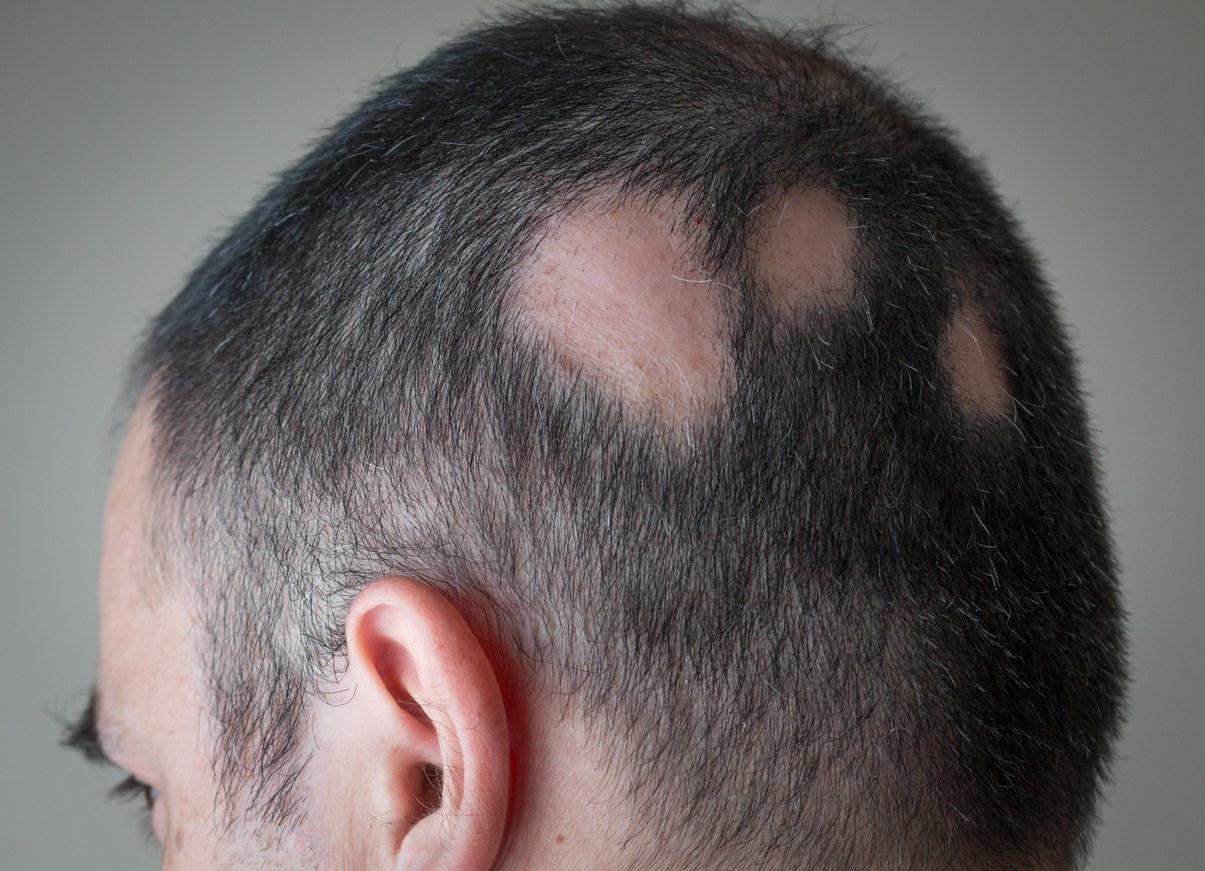
Alopecia areata is an autoimmune condition, meaning the immune system mistakenly identifies hair follicles as a threat and attacks them. The result is round or oval patches of hair loss that can appear out of nowhere, sometimes over just a few days. It can affect any area with hair, including eyebrows, eyelashes, and beard hair, not just the scalp.
What makes this form tricky is its unpredictability. Hair can regrow on its own in one spot while a new patch appears elsewhere, cycling through remission and flare-ups.
Traction Alopecia
Traction alopecia develops from consistent tension on the hair, usually from tight ponytails, braids, buns, or extensions. It’s a fairly common issue we see here on the First Coast, where protective styles and slicked-back ponytails are a go-to look for hot, humid days on the water. The telltale sign is thinning or breakage concentrated right along the hairline or wherever styling tension is greatest.
The encouraging news is that traction alopecia is largely preventable and, if caught early, often reversible by easing up on tight styling. Left unaddressed for years, the tension can eventually cause permanent follicle damage.
Cicatricial Alopecia
Cicatricial alopecia is a less common but more serious category, caused by inflammation that damages and ultimately scars the hair follicle itself. Once a follicle scars over, it typically can’t produce hair again, making this form permanent in affected areas.
Symptoms can include redness, itching, burning, or visible scaling on the scalp, sometimes before hair loss is even obvious. Because the inflammation driving this condition can progress quietly, early diagnosis is especially important.
Alopecia Symptoms Worth Paying Attention To
If you’re trying to decide whether what you’re experiencing is “just fall shedding” or something that needs a professional look, here are the signs that tip the scale toward alopecia:
- A visibly widening part line or a spot on the crown that seems more scalp than hair
- Distinct round or oval patches of hair loss, rather than an all-over thinning
- Hair loss that’s asymmetrical or noticeably worse on one side of the scalp than the other
- Shedding that continues well beyond three to six months with no sign of slowing down
- Changes to your nails, like pitting or ridging, alongside hair changes
- Redness, itching, or scaling on the scalp, which can point to an inflammatory or fungal cause rather than seasonal shedding
- A family history of pattern hair loss, especially if your shedding lines up with a known genetic pattern
An At-Home Check Some Dermatologists Recommend
Gently grasp a small section of dry hair — around 50 to 60 strands — and pull softly. Losing more than a handful of hairs repeatedly with this test can be a sign that shedding is more active than the seasonal norm, though it’s a screening tool, not a diagnosis.
When is it Time to See a Dermatologist?
Some hair loss is genuinely nothing to worry about, and some deserves a closer look. As a general rule, it’s worth scheduling an appointment if:
- Shedding has lasted longer than three months without improvement
- You’re noticing patches, rather than even thinning
- Your part is visibly widening or your ponytail feels noticeably thinner
- You have other symptoms like scalp pain, itching, redness, or nail changes
- Hair loss is affecting your confidence or emotional well-being
A dermatologist can do a lot in a single visit — a scalp exam, a review of your health history and medications, and sometimes bloodwork to rule out thyroid issues, iron deficiency, or hormonal imbalances. Getting an accurate diagnosis early is one of the biggest factors in how well certain types of alopecia respond to treatment.
How Do You Manage Alopecia?
Treatment depends heavily on the specific type and cause, but options our providers may discuss include:
- Topical or oral medications to slow loss and support regrowth
- Corticosteroid injections for alopecia areata patches
- Nutritional support if deficiencies in iron, zinc, or Vitamin D are contributing
- Lifestyle adjustments for traction alopecia
- Ongoing monitoring for autoimmune forms
There’s no one-size-fits-all fix, which is exactly why a proper evaluation matters more than guessing based on internet searches or trying every hair-growth serum on the shelf.
Not Sure What You’re Seeing? Let’s Find Out Together
A little extra shedding as summer turns to fall is usually just your hair doing what hair does: responding to sun, humidity, and the natural growth cycle. But if your shedding is patchy, persistent, or paired with changes like a widening part or nail issues, it’s worth getting a professional opinion.
Coastal Dermatology is Here For You
That’s where the professionals at Coastal Dermatology come into play. We serve patients throughout Jacksonville and Ponte Vedra Beach, and we’re always here to listen, examine, and put together a plan that works. Schedule an appointment online or call us directly to learn more about how we treat alopecia at our two locations.